Desserts · Part 1 of 3: Ingredients
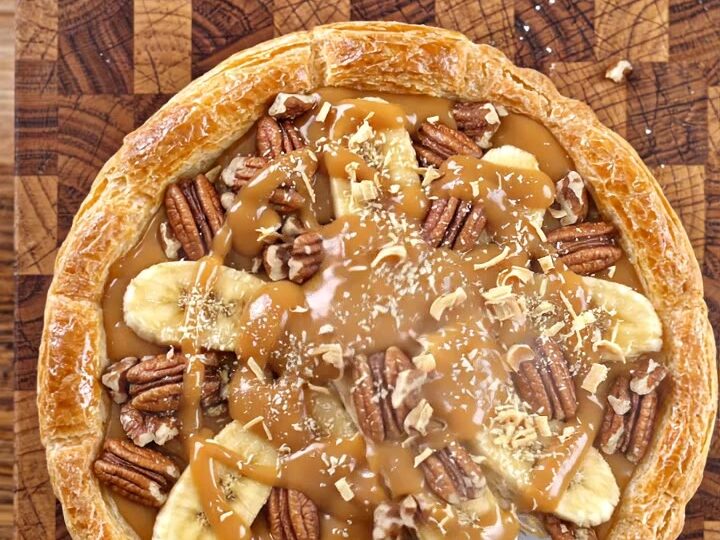
Bananas Foster Tart with Pecan Butterscotch Puff Pastry
- Prep
- Cook
- Total
- Serves
- 8
This Bananas Foster Tart takes the classic flavors of the famous New Orleans dessert — bananas, butterscotch, and pecans — and layers them over a crisp, buttery puff pastry. The result is a stunning, warm dessert that looks like it came from a fancy bakery but comes together in under an hour.
With a creamy butterscotch pastry cream, shingled banana slices, and a shower of blonde chocolate curls, every bite is a mix of textures and flavors: flaky, silky, sweet, and nutty. Perfect for a special occasion or a weekend treat.
Inspired by the beloved Bananas Foster, this tart swaps the traditional sautéed bananas for a baked version that lets the fruit soften and caramelize in the oven. A layer of warm butterscotch pastry cream adds richness, while toasted pecans bring crunch. The puff pastry bakes up golden and crisp, providing a sturdy base for all the toppings.
A final drizzle of bubbling butterscotch sauce and a snowfall of blonde chocolate curls make it look as indulgent as it tastes. Serve it warm for the best texture — the pastry stays flaky, the cream stays silky, and the chocolate softens just enough to melt on the tongue.
Ingredients
- 1 sheet puff pastry (about 10x15 inches), thawed if frozen
- 1 1/2 cups warm butterscotch pastry cream
- 3 large ripe but firm bananas
- 1 cup toasted pecans, chopped
- 4 oz blonde chocolate (caramelized white chocolate), grated into curls
- 1 large egg, beaten with 1 tablespoon water (for egg wash)
- 3/4 cup bubbling amber butterscotch sauce
Why this recipe works
The combination of warm butterscotch pastry cream and ripe bananas is a classic pairing that never fails. The cream is rich and velvety, with a deep caramel flavor from the brown sugar and butter, while the bananas add natural sweetness and a tender texture.
The puff pastry provides a crisp, buttery contrast that holds up to the moist filling without becoming soggy. Baking the tart rather than sautéing the bananas allows them to soften and release their juices, which meld with the cream and sauce during baking.
Shingling the bananas in neat rows ensures even cooking and a beautiful presentation. The diagonal bias cut gives larger, more elegant slices that fan out nicely. Toasting the pecans before chopping brings out their nutty oils and adds a deeper flavor.
The blonde chocolate, with its caramelized notes, echoes the butterscotch and ties the whole dessert together. The final drizzle of butterscotch sauce adds a glossy, bubbling finish that makes the tart look irresistible and adds an extra layer of sweetness.
Notes and substitutions
Butterscotch pastry cream can be made ahead and kept refrigerated for up to 3 days. Warm it gently before spreading to make it easier to work with. If you don't have time to make it from scratch, a high-quality vanilla pudding or a store-bought pastry cream can be substituted, but the butterscotch flavor is key to the dish. Blonde chocolate is available in many supermarkets; if you can't find it, white chocolate works but will be sweeter and less caramel-like.
Puff pastry should be thawed overnight in the refrigerator or at room temperature for about 30 minutes. Keep it chilled until ready to use to prevent it from becoming too soft. When grating the chocolate, use a box grater with large holes for nice curls. If the chocolate is too soft, chill it for 10 minutes. Choose bananas that are ripe but still firm so they hold their shape during baking. Overripe bananas will turn mushy.
- blonde chocolate: White chocolate (though it lacks the caramelized flavor) or semi-sweet chocolate for a darker contrast.
- butterscotch pastry cream: Pastry cream flavored with vanilla or rum, or a thick vanilla pudding.
- butterscotch sauce: Store-bought butterscotch sauce or caramel sauce.
- pecans: Walnuts or hazelnuts, toasted and chopped.
Equipment
- Box grater
- Pastry brush
- Baking sheet
- Parchment paper
- Sharp knife
- Cutting board
- Cooling rack
Up next · Part 2 of 3
8 steps · 30 min of cooking · what to look for at each stage
Step-by-step instructions (Part 2)