Dinner · Part 2 of 3: Instructions
Balsamic Fig Gorgonzola Crockpot Short Ribs Step-by-step instructions
- Prep
- Cook
- Total
- Serves
- 4
Before you start
Before you begin, ensure your slow cooker is clean and positioned on a level, heat-resistant surface. Take the beef short ribs out of the refrigerator about 20 minutes before you plan to start cooking to allow them to lose some of their chill.
Peel the garlic cloves and halve the fresh black mission figs, ensuring you remove any woody stems. Having all your ingredients measured and ready will make the assembly process seamless and efficient.
Ingredients at a glance (8)
- 4 lb bone-in beef short ribs
- 200 g black mission figs, halved
- 120 ml aged balsamic vinegar
- 240 ml beef broth
- 6 cloves garlic, peeled
- fresh rosemary sprigs, to taste
- cooked creamy polenta, for serving
- 4 oz aged Gorgonzola cheese, for serving
Instructions
Assembly Phase
- Assemble the slow cookerPlace the beef short ribs into the base of the slow cooker. Add the halved black mission figs, garlic cloves, and fresh rosemary sprigs on top of the ribs. Pour the aged balsamic vinegar and beef broth over the ingredients to ensure even coverage.Look for Ensure the ingredients are layered evenly for consistent cooking.Tip Use fresh rosemary for the best aromatic result.
At the end of this phase, the slow cooker should be neatly packed with the beef ribs at the bottom and the figs, garlic, and herbs distributed evenly. The liquid should be poured over everything, partially submerging the ingredients. It is important that the ribs are not stacked too high so that the heat can circulate effectively throughout the duration of the long cooking cycle.
Slow Cooking Phase
- Slow cook the ribsCover the slow cooker with the lid. Set the device to the LOW setting and cook for 8 hours. During this time, the figs will soften and break down, while the balsamic vinegar and beef broth combine to create a thick, glossy lacquer that coats the meat. Ensure the beef reaches an internal temperature of 145°F (63°C) and let it rest for at least 3 minutes before serving.Look for The figs should be fully jammed down and the sauce should be thick and bubbling.Safe temperature 145°F (63°C) internal temperature (steaks, chops and roasts)Tip Keep the lid closed throughout the cooking process to maintain consistent heat.
By the end of the 8-hour cooking cycle, the kitchen should be filled with a rich, savory aroma. The figs should have completely broken down into the balsamic liquid, creating a dark, thick, and glossy sauce. The beef should be visibly tender, with the meat shrinking slightly away from the bones. If the sauce looks too thin, you may leave the lid off for the final 15 minutes to allow for further reduction.
Final Plating Phase
- Serve the dishOnce the cooking time is complete, remove the ribs and let them rest for at least 10 minutes. Serve the tender short ribs over a bed of hot, creamy polenta. Drizzle the remaining balsamic fig reduction from the slow cooker over the top and finish with generous crumbles of aged Gorgonzola cheese.Look for The meat should be fall-apart tender when touched with a fork.Safe temperature 145°F (63°C) internal temperature (steaks, chops and roasts)Tip Ensure the Gorgonzola is added just before serving so it melts slightly from the heat of the ribs.
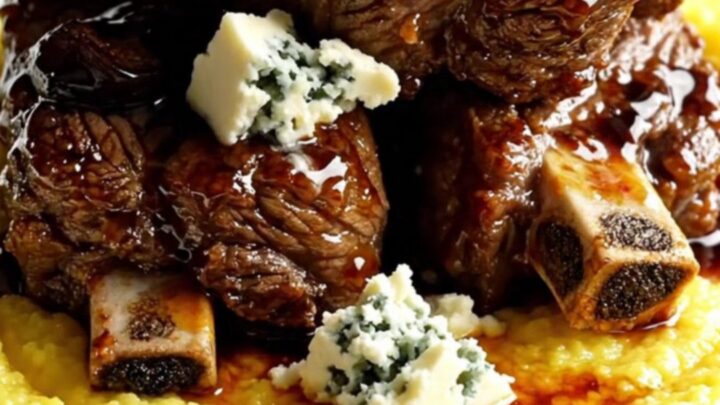
The final dish should feature the tender, glazed short ribs resting elegantly on a bed of warm, creamy polenta. The sauce should be syrupy and coat the meat uniformly.
When you add the crumbled Gorgonzola, it should begin to soften slightly from the ambient heat of the ribs. The presentation should look cohesive, with the deep colors of the beef and figs highlighted by the white polenta and the blue-veined cheese.
Common mistakes
One common mistake is opening the lid too frequently during the cooking process. Each time the lid is removed, heat and moisture escape, which significantly increases the cooking time and can prevent the sauce from reaching the desired consistency.
Another potential error is using a low-quality balsamic vinegar; the sauce will not develop the necessary thickness or sweetness. Finally, avoid skipping the resting period, as this is crucial for the final texture of the ribs.
How to tell it’s done
The short ribs are done when the meat is exceptionally tender and easily pulls away from the bone with a simple fork. A meat thermometer should register at least 145°F (63°C) in the thickest part of the meat.
Because this is a long-cooking dish, the meat will likely exceed this temperature, which is perfectly fine; the connective tissue breakdown is the true indicator of readiness. Always let the meat rest for 10 minutes to allow the juices to redistribute.
- Steaks, chops and roasts: 145°F (63°C) in the thickest part, then a 3-minute rest
Up next · Part 3 of 3
2 variations · storage & make-ahead · 3 answers · printable card
Tips, FAQ & printable recipe (Part 3)← Back to the ingredients (Part 1)