Breakfast · Part 2 of 3: Instructions
Bakery-Style Cinnamon Rolls with Cream Cheese Frosting Step-by-step instructions
- Prep
- Cook
- Total
- Serves
- 12
Before you start
Before starting, bring the milk to lukewarm (about 110°F), soften the butter and cream cheese, and measure all ingredients. Have a 9x13-inch baking dish greased and ready. Clear a warm spot for rising—an oven with the light on works well.
Prepare the filling and frosting ingredients so everything is within reach. The dental floss should be unflavored. Preheat the oven only when the rolls are ready for their final rise.
Ingredients at a glance (15)
- 4 1/4 cups all-purpose flour
- 1 1/4 cups warm milk
- 2 1/4 tsp active dry yeast
- 1/3 cup granulated sugar
- 1/2 cup unsalted butter, softened
- 1 large egg
- 1/2 tsp salt
- 3/4 cup packed brown sugar
- 1 1/2 tbsp ground cinnamon
- 1/4 cup unsalted butter, melted
- 1/4 cup heavy whipping cream, warm
- 4 oz cream cheese, softened
- 1 cup confectioners' sugar
- 1 tsp vanilla extract
- 2 tbsp unsalted butter, softened
Instructions
Phase 1: Dough
- Make the DoughIn the bowl of a stand mixer, combine warm milk and yeast. Let stand for 5 minutes until foamy. Add sugar, egg, salt, and 2 cups of flour. Mix on low until combined. Add remaining flour, 1/2 cup at a time, and knead with dough hook on medium speed for 5-7 minutes until dough is smooth and elastic. Add softened butter gradually during kneading.Look for Dough is glossy, elastic, and pulls away from the sides of the bowl.Tip If dough is too sticky, add flour 1 tablespoon at a time. Too dry? Add milk 1 teaspoon at a time.
- Let the Dough RiseTransfer dough to a lightly greased bowl, cover with plastic wrap or a clean kitchen towel, and let rise in a warm place until doubled in size, about 1 hour.Look for Dough has doubled and springs back when gently poked.Tip A warm oven (turned off) with a pan of hot water creates a perfect proofing environment.
After kneading, the dough should be smooth, elastic, and slightly tacky to the touch. It should pass the windowpane test: a small piece stretches into a thin membrane without tearing.
After rising, it will have doubled in size and feel airy. If it doesn't rise, the yeast may be inactive, and you need to start over.
Phase 2: Assembly
- Prepare the FillingIn a small bowl, mix brown sugar and cinnamon. In another bowl, melt 1/4 cup butter. Set aside.Look for Filling is uniform and fragrant.Tip Use soft brown sugar to avoid lumps.
- Roll and Fill the DoughOn a lightly floured surface, roll the dough into a large rectangle, about 16x12 inches. Brush with melted butter, leaving a 1/2-inch border. Sprinkle evenly with brown sugar-cinnamon mixture.Look for Even layer of filling covers the dough.Tip Roll dough to an even thickness for uniform rolls.
- Roll and Slice the LogStarting from the long edge, tightly roll the dough into a log. Use unflavored dental floss to slice the log into 12 equal pinwheels. Place rolls in a greased 9x13-inch baking dish, cut side up.Look for Clean spirals with distinct layers.Tip Dental floss slices without squishing the dough.
- Second RiseCover the baking dish with plastic wrap and let rolls rise in a warm place for 30 minutes, until puffy and almost doubled.Look for Rolls look puffy and fill the dish.Tip This rise makes them extra soft.
The rolled dough should be a tight spiral with the filling evenly distributed. Slices should be about 1 1/2 inches thick and hold their shape. The rolls in the dish should look puffy and nearly touching after the second rise. The kitchen will smell of cinnamon and butter.
Phase 3: Baking
- Bake the RollsPreheat oven to 350°F (175°C). Warm the heavy cream in a small saucepan or microwave until lukewarm. Pour the warm cream over the risen rolls. Bake for 28 minutes, until lightly golden and the internal temperature of the rolls reaches 160°F (71°C) for the egg.Look for Rolls are golden brown and the cream has created a gooey base.Safe temperature 160°F (71°C) internal temperature (egg dishes)Tip If tops brown too quickly, tent with foil.
- Make the FrostingWhile rolls bake, beat cream cheese, butter, confectioners' sugar, and vanilla until smooth and fluffy.Look for Frosting is light and spreadable.Tip Soften cream cheese and butter fully for lump-free frosting.
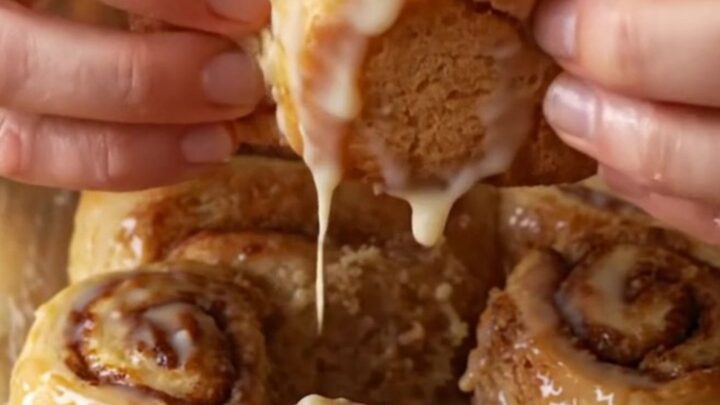
- Frost and ServeRemove rolls from oven and let cool for 5 minutes. Spread the cream cheese frosting generously over the warm rolls. Serve warm.Look for Frosting melts slightly into the rolls.Tip For extra gooeyness, frost immediately.
The rolls will be golden brown, and the cream will have created a sticky, gooey sauce in the bottom of the dish. The tops will spring back when lightly pressed. The frosting should be smooth and spreadable, melting slightly when applied to warm rolls.
Common mistakes
One common mistake is over-flouring the dough, which makes rolls dense. Add flour gradually and stop when the dough is soft and slightly tacky. Another is not letting the dough rise enough—patience is key.
Slicing with a knife can squish the rolls; use dental floss. Pouring cold cream over the rolls can shock the dough; always warm it. Overbaking dries out the rolls; check at 25 minutes.
How to tell it’s done
The rolls are done when they are lightly golden on top and the internal temperature reaches 160°F (71°C) for the egg. The edges will be slightly browned, and the cream will have formed a bubbly, caramelized layer at the bottom.
If you insert a thermometer into the center of a roll, it should read at least 160°F (71°C). Let them cool for 5 minutes before frosting to avoid melting the frosting completely.
- Egg dishes: 160°F (71°C) in the thickest part
Up next · Part 3 of 3
4 variations · storage & make-ahead · 5 answers · printable card
Tips, FAQ & printable recipe (Part 3)← Back to the ingredients (Part 1)