Dinner · Part 2 of 3: Instructions
Baked Cream Cheese Chicken Step-by-step instructions
- Prep
- Cook
- Total
- Serves
- 4
Before you start
Before starting, ensure all ingredients are measured and ready. Pat the chicken breasts dry thoroughly with paper towels, as excess moisture prevents the meat from browning properly in the skillet. Soften the cream cheese at room temperature for about 20 minutes to help it melt smoothly into a sauce rather than clumping.
Have your spatula and skillet ready, and make sure your workspace is clean. Proper preparation ensures the cooking process remains efficient and stress-free throughout the entire time you are in the kitchen.
Ingredients at a glance (2)
- 4 boneless skinless chicken breasts
- 8 oz cream cheese
Instructions
Preparation
- Prepare the chickenPat the chicken breasts dry with paper towels. Ensure the chicken rests out of the refrigerator for no more than 15 to 20 minutes before cooking for even heat distribution across each piece.Look for The chicken should be dry to the touch.Tip Always keep raw poultry chilled until shortly before cooking.
The chicken should be dry to the touch to ensure a good sear. Confirm that the pan is clean and the cream cheese is at room temperature. This phase is complete when the pan is hot and the chicken is ready to hit the skillet, setting the stage for a successful and flavorful cooking experience.
Searing the Chicken
- Sear the chickenPlace a cast iron skillet over medium-high heat. Once hot, add the chicken breasts to the pan. Sear the chicken until it develops a deep golden-brown crust on the exterior, turning carefully with a spatula.Look for The chicken should have a deep golden-brown exterior.Tip Avoid moving the chicken too much while searing so it develops a crust.
At the end of this phase, the chicken breasts should have a deep, appetizing golden-brown color on both sides. The skillet should be hot, and you might hear a consistent sizzle as the chicken cooks. Check that the crust is well-formed without burning, as this provides the necessary flavor base for the creamy sauce that will be added in the final phase.
Melting and Finishing
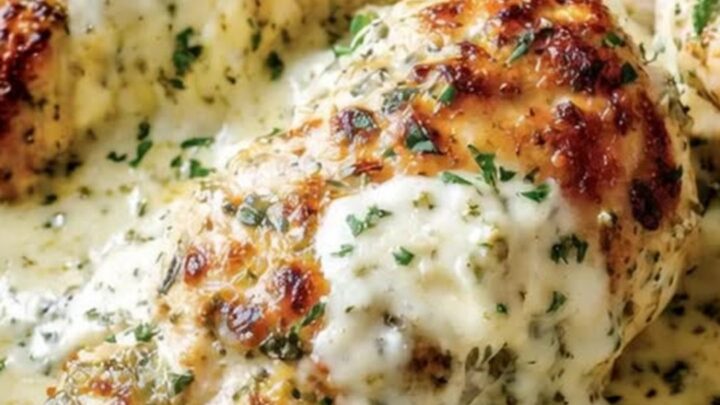
- Bake with cream cheeseReduce the heat to low and add the cream cheese directly to the skillet around the chicken breasts. Cover the pan and allow the cream cheese to melt and combine with the pan juices to create a smooth, velvety sauce. Continue cooking until the chicken reaches an internal temperature of 165°F (74°C). Remove from the heat and let the chicken rest for 5 minutes before serving.Look for The sauce should be bubbling and smooth, and the chicken should be opaque throughout.Safe temperature 165°F (74°C) internal temperature (poultry)Tip Keep an eye on the sauce to ensure it does not brown or burn on the bottom of the pan.
The sauce should be smooth, velvety, and bubbling gently around the chicken. The kitchen will smell fragrant and rich. Check that the chicken is cooked through to 165°F (74°C) and the cheese has completely melted into a cohesive sauce.
The chicken should look tender and coated in the creamy mixture, ready for a brief rest before being plated and served.
Common mistakes
Avoid overcrowding the skillet, as this can cause the chicken to steam instead of sear, preventing that essential golden-brown crust. Do not use high heat for the entire duration of the cooking process, as this will lead to a scorched sauce and tough, dry meat.
Ensure you monitor the heat carefully when adding the cream cheese to prevent it from splitting or burning. Finally, do not skip the resting period, as cutting into the chicken too early will cause all those delicious juices to escape, leaving you with dry meat.
How to tell it’s done
The chicken is done when it reaches an internal temperature of 165°F (74°C) as measured by a meat thermometer inserted into the thickest part of the breast. Visually, the meat should be opaque throughout, and the juices should run clear when pierced with a fork.
The cream cheese sauce should be smooth, bubbly, and fully incorporated around the chicken pieces. Always allow the chicken to rest for at least 5 minutes before serving to ensure the juices redistribute throughout the meat, resulting in a tender and juicy final texture.
- Poultry: 165°F (74°C) in the thickest part
Up next · Part 3 of 3
2 variations · storage & make-ahead · 3 answers · printable card
Tips, FAQ & printable recipe (Part 3)← Back to the ingredients (Part 1)