Dinner · Part 2 of 3: Instructions
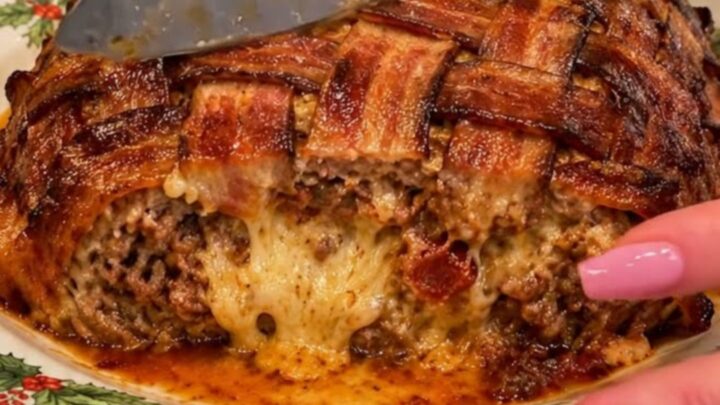
Bacon-Wrapped Cheese-Stuffed Beef Roast Step-by-step instructions
- Prep
- Cook
- Total
- Serves
- 6
Before you start
Before beginning, ensure the beef roast is at room temperature for about 30 minutes to ensure even cooking. Prepare the cheese by cutting it into uniform, thick strips that will fit comfortably inside the meat.
Have your kitchen twine ready if you prefer extra security for the bacon wrapping. Clear a large, clean workspace for the bacon weaving process to ensure efficiency and ease of assembly.
Ingredients at a glance (4)
- 3 lb beef roast, trimmed
- 8 oz cheese, cut into thick strips
- 1 lb bacon, thinly sliced
- 1 tbsp kosher salt and black pepper mix
Instructions
Stuffing the Roast
- Prepare the roastUsing a sharp chef knife, carefully cut a deep pocket lengthwise through the center of the beef roast, ensuring not to slice all the way through to the other side. Stuff the cavity with the thick strips of cheese, packing them tightly inside to ensure a generous, molten center once cooked.Look for The roast should hold the cheese securely inside the cavity.Tip Ensure the cheese is cold before stuffing to prevent it from melting too quickly during preparation.
The roast should have a clean, deep pocket that is firmly packed with cheese. Ensure the cheese is completely enclosed by the beef to prevent it from leaking out prematurely during the roasting process. The roast should be dry on the surface before you proceed to the next step of wrapping it in bacon.
Weaving the Bacon
- Wrap and seasonLay the bacon strips in a lattice weave pattern on a clean surface. Place the stuffed beef roast on top, then wrap the bacon tightly around the meat. Secure the bacon with kitchen twine if necessary. Rub the entire exterior with the salt and pepper mixture to ensure an even, savory crust.Look for The bacon should cover the beef completely in a tight, uniform weave.Tip Pull the bacon strips taut while weaving to ensure they stay secure during the roasting process.
The bacon lattice should be tight and uniform, covering the entire surface of the beef roast without any large gaps.
The bacon strips should be pulled taut during the wrapping process to ensure they stay in place. Once wrapped, the roast should be seasoned generously with salt and pepper to enhance the flavor profile.
Roasting to Perfection
- Roast and servePreheat the oven to 375°F (190°C). Place the roast on a baking sheet and cook until the bacon is crispy and golden brown, and the beef reaches an internal temperature of 145°F (63°C). Remove from the oven and let the roast rest for at least 10 minutes before slicing to keep the juices inside.Look for The bacon is deep golden brown and crispy to the touch.Safe temperature 145°F (63°C) internal temperature (steaks, chops and roasts)Tip Insert the thermometer into the thickest part of the beef, avoiding the cheese center for an accurate reading.
At the end of this phase, the bacon should be crispy and golden-brown, with an audible crunch when touched. The beef should be tender and cooked to a safe internal temperature of 145°F (63°C). The aroma of roasted beef and rendered bacon should fill the kitchen, signaling that the dish is ready for its final rest.
Common mistakes
A common mistake is failing to secure the bacon, which can cause the weave to unravel during roasting; use kitchen twine to prevent this. Another error is overcooking the beef, which can lead to dry meat; monitor the internal temperature closely.
Finally, slicing the roast immediately after it comes out of the oven will cause the precious juices and melted cheese to run out, so always prioritize the resting time.
How to tell it’s done
The roast is perfectly done when the bacon is deeply golden and crispy, and the internal temperature of the beef reaches 145°F (63°C) as measured by a meat thermometer.
After removing the roast from the oven, allow it to rest for at least 10 minutes. This resting period is critical as it allows the juices to redistribute throughout the meat, ensuring that every slice remains moist and tender.
- Steaks, chops and roasts: 145°F (63°C) in the thickest part, then a 3-minute rest
Up next · Part 3 of 3
2 variations · storage & make-ahead · 3 answers · printable card
Tips, FAQ & printable recipe (Part 3)← Back to the ingredients (Part 1)