Dinner · Part 2 of 3: Instructions
Authentic Italian Lasagna Bolognese with Velvety Béchamel Step-by-step instructions
- Prep
- Cook
- Total
- Serves
- 8
Before you start
Before starting, make sure you have the ragù ready – it can be homemade or store-bought. If using fresh pasta sheets, trim them to fit your baking dish. Grate the Parmesan and shred the mozzarella. Have all your ingredients measured and within reach. Preheat the oven to 375°F (190°C) while you prepare the béchamel. This will make the assembly process smooth and efficient.
Ingredients at a glance (9)
- 12 sheets lasagna pasta
- 500 g slow-cooked beef and pork bolognese ragù
- 50 g butter
- 50 g all-purpose flour
- 600 ml whole milk
- 1 pinch freshly grated nutmeg
- 250 g fresh mozzarella, shredded
- 80 g Parmigiano-Reggiano, grated
- 1 tsp salt
Instructions
Make the Béchamel
- Make the BéchamelIn a saucepan over medium heat, melt the butter. Whisk in the flour and cook for 1–2 minutes until lightly golden. Gradually pour in the warm milk, whisking constantly to prevent lumps. Continue whisking until the sauce thickens and coats the back of a spoon. Season with the nutmeg and salt.Look for The sauce should be smooth, glossy, and thick enough to coat a spoon.Tip Keep the milk warm before adding to avoid a lumpy béchamel.
- Preheat the OvenPreheat the oven to 375°F (190°C).Look for Oven is ready when the temperature stabilizes.Tip Position the rack in the center of the oven for even baking.
The béchamel should be smooth, glossy, and thick enough to coat the back of a spoon. It should have a subtle nutmeg aroma and no lumps. The sauce will thicken further as it cools, so it's okay if it's slightly thinner than you think – it will set during baking. Taste and adjust salt if needed. If you notice lumps, whisk vigorously or strain the sauce before using.
Layer the Lasagna
- Layer the LasagnaSpread a thin layer of ragù on the bottom of a 9x13-inch baking dish. Place a layer of lasagna sheets over the sauce, then top with more ragù, a layer of béchamel, a sprinkle of mozzarella, and a dusting of Parmesan. Repeat the layers until all ingredients are used, finishing with a final layer of béchamel and the remaining cheeses.Look for You should have at least three layers of pasta and sauce, with cheese on top.Tip Press the pasta sheets gently so they settle into the sauce – this helps them cook evenly.
- Top with CheeseEnsure the top layer is generously covered with the remaining béchamel, then scatter the remaining mozzarella and Parmesan over the surface.Look for The top should be fully covered with cheese – this will create a golden crust.Tip A final drizzle of béchamel over the cheese helps keep the top moist while baking.
You should have three or four layers of pasta, ragù, béchamel, and cheese. The top layer should be completely covered with béchamel and a generous amount of cheese. The layers should be even and compact, not overflowing.
Press the pasta sheets lightly so they settle into the sauce. The dish should look full but not overfilled – leave a little room for the sauce to bubble without spilling.
Bake and Rest
- Bake the LasagnaPlace the dish on a baking sheet to catch any drips. Bake for 35 minutes, until the top is deeply golden brown and bubbling at the edges.Look for The cheese should be bubbly and browned, and the sauce should be bubbling around the edges.Safe temperature 160°F (71°C) internal temperature (ground meat)Tip If the top browns too quickly, loosely cover with foil for the last 10 minutes.
- Rest Before ServingRemove the lasagna from the oven and let it rest for 15 minutes. This allows the layers to set and makes slicing cleaner.Look for The lasagna should be firm enough to cut into neat squares.Tip Use a sharp knife to cut through the layers without dragging the cheese.
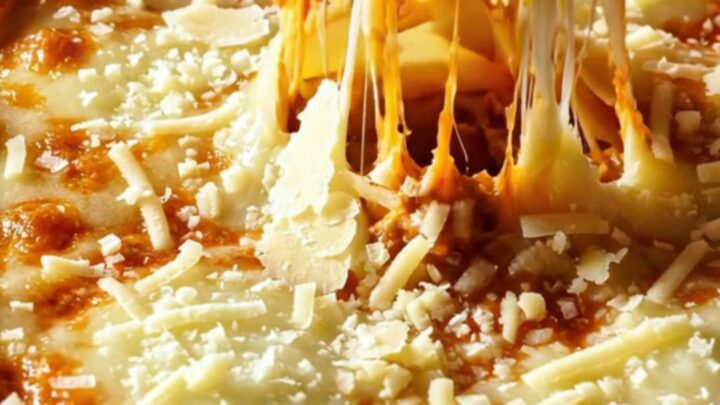
- Slice and ServeSlice the lasagna into generous portions and serve warm. The layers should hold together, with the cheese stretching as you lift a piece.Look for Each portion should show distinct layers of pasta, ragù, béchamel, and cheese.Tip Serve with a simple green salad for a complete meal.
After 35 minutes, the top should be deeply golden brown and the edges bubbling. The cheese should be melted and slightly crusty in spots. The lasagna should be firm to the touch and the sauce should be bubbling around the edges.
Let it rest for 15 minutes – this is crucial for clean slices. The internal temperature should reach 160°F (71°C) to ensure the ragù is fully heated.
Common mistakes
One common mistake is not cooking the béchamel long enough – it should be thick enough to coat the back of a spoon. Another is overloading the lasagna with too much sauce, making it watery.
Be sure to let the lasagna rest after baking; cutting too soon will cause the layers to slide apart. Also, avoid using pre-shredded mozzarella, as it often contains anti-caking agents that prevent it from melting smoothly.
How to tell it’s done
The lasagna is done when the top is deeply golden brown and bubbling at the edges. The cheese should be melted and slightly crusty in spots.
To check the internal temperature, insert an instant-read thermometer into the center of the lasagna – it should read at least 160°F (71°C) to ensure the meat ragù is fully heated through. Let the lasagna rest for 15 minutes before slicing to allow the layers to set.
- Ground meat: 160°F (71°C) in the thickest part
Up next · Part 3 of 3
4 variations · storage & make-ahead · 5 answers · printable card
Tips, FAQ & printable recipe (Part 3)← Back to the ingredients (Part 1)