Dinner · Part 2 of 3: Instructions
Authentic Greek Pastitsio with a Velvety Béchamel Crust Step-by-step instructions
- Prep
- Cook
- Total
- Serves
- 8
Before you start
Before you begin cooking, organize all your ingredients and equipment to ensure a smooth process. Measure out your tubular pasta, ground beef, béchamel sauce, and grated cheese.
Grease your 9x13-inch baking dish with butter or cooking spray. Having everything prepped and within arm's reach makes assembling this multi-layered masterpiece stress-free and enjoyable.
Ingredients at a glance (4)
- 1 lb tubular pasta, such as bucatini or penne
- 1 1/2 lbs ground beef
- 3 cups béchamel sauce, store-bought or made ahead
- 1 cup grated cheese
Instructions
Preparing the Pasta and Simmering the Beef
- Boil the PastaCook the tubular pasta in a large pot of boiling salted water until al dente. Drain the pasta thoroughly in a colander and set it aside to cool slightly before assembling the layers.Look for The pasta should be tender but still have a slight bite.Tip Do not overcook the pasta, as it will continue to cook in the oven.
- Simmer the BeefIn a large skillet over medium heat, cook the ground beef, breaking it up with a wooden spoon. Simmer the beef until it is fully browned and cooked through to a safe internal temperature of 160°F (71°C), ensuring no pink remains.Look for The beef should be completely browned and cooked through.Safe temperature 160°F (71°C) internal temperature (ground meat)Tip Drain any excess fat from the skillet to keep the layers clean.
At the end of this phase, your tubular pasta should be cooked al dente and drained thoroughly. The ground beef should be completely browned, cooked through to 160°F (71°C), and deeply fragrant with no excess liquid pooled at the bottom of the skillet, ensuring a sturdy and flavorful meat layer.
Assembling the Layers
- Layer the Pasta and BeefPreheat the oven to 350°F (175°C). Grease a 9x13-inch baking dish. Arrange the cooked tubular pasta evenly in the bottom of the dish, pressing down gently. Spread the simmered beef in a uniform layer directly over the pasta.Look for The pasta and beef layers should be distinct and evenly distributed.Tip Pressing the pasta down slightly helps create a sturdier base for slicing.
- Add Béchamel and CheesePour the velvety béchamel sauce evenly over the beef layer, smoothing it with a spatula. Sprinkle the grated cheese uniformly over the top of the béchamel to create the base for the signature golden crust.Look for The béchamel should completely cover the beef, topped with an even layer of cheese.Tip Spread the béchamel all the way to the edges of the dish to seal the layers.
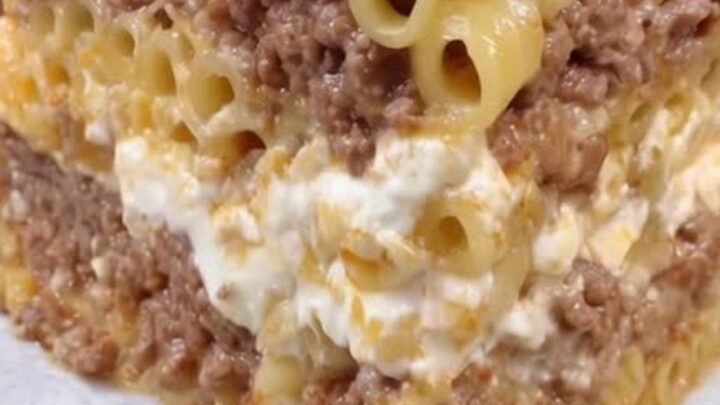
The pasta should form an even, compact base at the bottom of the greased baking dish, followed by a neatly spread layer of the simmered beef. The velvety béchamel sauce should be smoothed into a level blanket over the beef, completely covered with a uniform layer of grated cheese.
Baking and Resting
- Bake to Golden PerfectionBake the assembled pastitsio in the preheated oven for 45 to 50 minutes. The top should become deeply caramelized and golden-brown, with the cheese bubbling beautifully around the edges of the dish.Look for The top should have a rich, caramelized golden crust.Tip If the top browns too quickly, tent the dish loosely with foil.
- Rest and SliceRemove the pastitsio from the oven and let it rest on a wire rack for 20 minutes before slicing. This resting period is essential for the layers to set, allowing you to cut clean, beautiful, tall slices.Look for The top layer should feel set and firm to a gentle touch.Tip Slicing too early will cause the warm layers to slide and lose structure.
After baking, the pastitsio will have a gorgeous, caramelized golden-brown crust on top, with bubbles gently popping around the edges.
Steam will rise from the dish, and the kitchen will be filled with a rich, savory aroma of toasted cheese and baked cream. The center should feel firm when gently pressed, and the dish must rest for 20 minutes to set.
Common mistakes
One common mistake is slicing the pastitsio immediately after taking it out of the oven. While it is tempting to dig in right away, slicing it hot will cause the layers to slide apart and lose their structure.
Another error is overcooking the pasta during the boiling stage; overcooked pasta will become mushy and absorb too much moisture during baking, leading to a soft and unstable dish.
How to tell it’s done
To determine if your pastitsio is fully cooked and safe to eat, ensure the ground beef is cooked to a safe internal temperature of 160°F (71°C) during the simmering stage.
Visually, the baked pastitsio is ready when the top is deeply golden and caramelized, and the edges are bubbling vigorously. The entire bake should feel set and stable when gently shaken, indicating the layers have bonded.
- Ground meat: 160°F (71°C) in the thickest part
Up next · Part 3 of 3
2 variations · storage & make-ahead · 3 answers · printable card
Tips, FAQ & printable recipe (Part 3)← Back to the ingredients (Part 1)