Dinner · Part 2 of 3: Instructions
Authentic Greek Pastitsio with Creamy Béchamel Step-by-step instructions
- Prep
- Cook
- Total
- Serves
- 8
Before you start
Before beginning the cooking process, ensure that all necessary ingredients are measured and ready on the counter. Preheat the oven to 350°F (175°C) to ensure it is at the correct temperature when the assembly is complete.
Prepare the baking dish by lightly greasing it with butter or oil to prevent sticking. Have all cooking utensils, such as a sturdy whisk and a large spatula, within easy reach, as the béchamel requires constant attention during the thickening phase to ensure a smooth, lump-free final texture.
Ingredients at a glance (3)
- 1 lb tubular pasta, such as ziti or bucatini
- 2 lb ground beef
- 4 cups milk
Instructions
Preparing the foundational layers
- Prepare the meat sauceBrown the ground beef in a large skillet over medium-high heat until fully cooked through. Ensure the meat reaches an internal temperature of 160°F (71°C). Drain any excess fat before proceeding to the next step.Look for The beef should be deeply browned and no longer pink.Safe temperature 160°F (71°C) internal temperature (ground meat)Tip Adding a pinch of cinnamon or nutmeg to the beef sauce provides an authentic flavor profile.
- Cook the pastaBring a large pot of salted water to a boil. Cook the tubular pasta until just al dente, then drain well. Set aside until ready for assembly.Look for The pasta should be firm to the bite.Tip Slightly undercooking the pasta ensures it maintains its texture during the final baking process.
The meat sauce should be deeply browned and fragrant, with the moisture mostly evaporated to ensure a concentrated flavor. The pasta should be cooked to an al dente state, retaining a firm bite that will withstand the subsequent baking time. Once these components are ready, they should be set aside and kept warm while the final sauce is prepared.
Creating the creamy béchamel
- Prepare the béchamelHeat the milk in a saucepan over medium heat. Whisk continuously until the sauce thickens and becomes smooth. Ensure the sauce is thick enough to coat the back of a spoon.Look for The sauce should coat the back of a spoon.Tip Whisking vigorously prevents lumps from forming in the sauce.
The béchamel should reach a thick, velvety consistency that coats the back of a spoon without running off too quickly. It must be completely smooth and free of any lumps. The color will be pale and creamy, with a rich aroma. Once this consistency is achieved, remove it from the heat immediately to prevent further thickening or burning.
Final assembly and baking
- Assemble and bakeLayer the cooked pasta in a 9x13 inch baking dish. Spread the meat sauce over the pasta. Pour the thick béchamel sauce evenly over the top layer. Bake until the top is golden brown and bubbling.Look for The crust should be golden brown and the sauce bubbling.Tip Allow the dish to rest for twenty minutes before slicing for clean, professional layers.
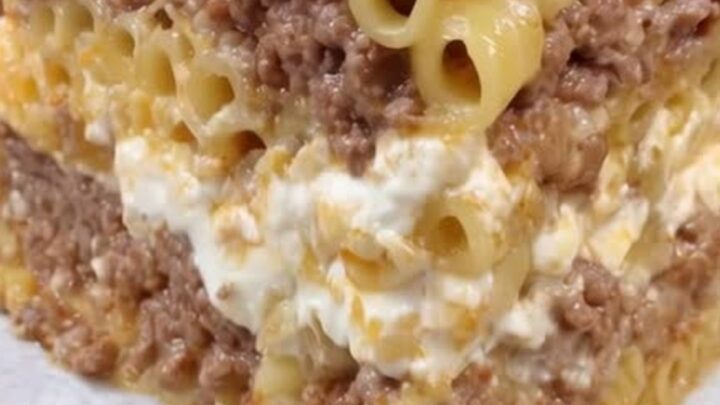
The assembled dish will look uniform, with the béchamel providing a smooth, thick layer over the meat and pasta. During baking, the top will transform into a rich, golden-brown crust.
The dish will smell deeply savory and toasted. After removing from the oven, it must rest until it feels stable and firm, indicating that the internal layers have successfully set.
Common mistakes
Avoid the common mistake of rushing the béchamel sauce, which can lead to a thin, runny topping that fails to set properly. Another frequent error is failing to rest the dish after baking; cutting into it too soon will cause the layers to collapse.
Ensure the meat is fully browned and drained of excess fat to prevent the bottom layer of pasta from becoming greasy or waterlogged. Finally, do not overcrowd the baking dish, as this can affect the even distribution of heat and the final texture.
How to tell it’s done
The dish is considered done when the béchamel topping has turned a deep, golden brown and is bubbling steadily around the edges of the baking dish. The internal temperature of the meat layer should have reached a safe 160°F (71°C) during the initial browning phase.
When removing from the oven, the structure should feel firm when gently nudged. Allow it to rest for at least 20 minutes before cutting to ensure the layers hold their shape perfectly when transferred to individual serving plates.
- Ground meat: 160°F (71°C) in the thickest part
Up next · Part 3 of 3
2 variations · storage & make-ahead · 3 answers · printable card
Tips, FAQ & printable recipe (Part 3)← Back to the ingredients (Part 1)