Appetizers · Part 2 of 3: Instructions
Authentic Crispy Osaka Takoyaki Octopus Balls Step-by-step instructions
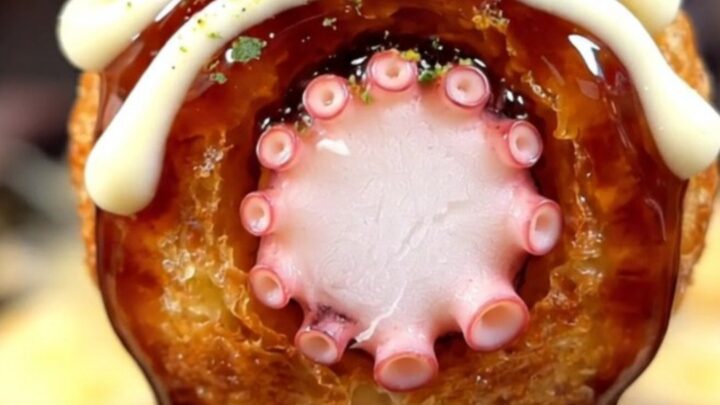
- Prep
- Cook
- Total
- Serves
- 4
Before you start
Before beginning, ensure all ingredients are prepped and within reach, as the cooking process is very fast. Finely dice the boiled octopus and chop the scallions to ensure they fit easily into the moulds. Have the steel picks and oil brush ready by the stove.
If using a cast-iron pan, make sure it is thoroughly preheated over medium-high heat. Clear your workspace to allow for the rapid, rhythmic movements required to flip the takoyaki balls efficiently without burning your fingers or the batter.
Ingredients at a glance (9)
- 300 ml dashi-enriched wheat batter
- 150 g boiled octopus tentacles, diced
- 1/4 cup tempura scraps
- 2 tbsp pickled red ginger, minced
- 2 tbsp scallions, finely chopped
- Takoyaki sauce, for serving
- Kewpie mayo, for serving
- Aonori seaweed, for serving
- Katsuobushi bonito flakes, for serving
Instructions
Filling the moulds
- Prepare the batter and fillingEnsure the cast-iron takoyaki pan is well-oiled and heated over medium-high heat. Pour the dashi-enriched wheat batter into the moulds until they are nearly full. Evenly distribute the diced boiled octopus tentacles, tempura scraps, pickled red ginger, and scallions into each mould, ensuring each sphere gets a generous portion of the ingredients.Look for The batter should begin to sizzle immediately upon contact with the pan.Tip Keep the pan well-oiled to ensure the takoyaki releases easily during the flipping process.
At the end of this phase, the takoyaki pan should be sizzling with the batter and fillings. The octopus, tempura scraps, ginger, and scallions should be distributed evenly across the moulds. The batter will begin to set around the edges, creating a foundation for the balls.
Ensure the pan is hot enough so that the bottom of the takoyaki starts to crisp immediately. If the batter is not bubbling, increase the heat slightly before proceeding to the flipping stage.
Flipping and shaping
- Shape the golden spheresUsing steel picks, rapidly rotate the batter as it sets. The goal is to fold the edges inward, pushing the cooked batter and fillings into a perfect sphere. Continue to cook at 400°F (204°C) for approximately 4 minutes, ensuring the exterior turns crisp and golden while the interior remains soft and molten. Monitor the temperature carefully to ensure the octopus is thoroughly heated.Look for The balls should feel firm to the touch and have a deep golden-brown exterior.Safe temperature 145°F (63°C) internal temperature (shellfish)Tip Use a swift, confident motion with the steel picks to tuck the edges into the centre effectively.
By the end of this phase, the takoyaki should have transformed into uniform, golden-brown spheres. The rapid flipping process should have successfully tucked all the edges inward, resulting in a smooth, round exterior.
The balls should sound crisp when tapped with the steel picks. Check that the interior is cooked through and molten by observing the steam escaping from the balls. They should be firm enough to hold their shape perfectly without collapsing when removed from the pan.
Garnishing and serving
- Garnish and serveOnce the takoyaki are perfectly golden and crisp, remove them from the heat. Arrange them on a serving plate. Brush each ball generously with takoyaki sauce, drizzle with Kewpie mayo, and sprinkle with aonori seaweed. Finish by topping with a handful of katsuobushi bonito flakes, which will dance in the steam rising from the hot takoyaki.Look for The bonito flakes should start to wave and dance immediately upon hitting the hot surface.Tip Serve immediately while the takoyaki are piping hot to enjoy the contrast between the crispy shell and molten centre.
The final stage results in a visually stunning plate of takoyaki. The sauce, mayo, and seaweed should be applied neatly, creating a beautiful contrast against the golden-brown crust. The most important checkpoint is the movement of the bonito flakes; they should be dancing and waving due to the heat rising from the freshly cooked snacks. Serve the dish immediately, as the texture is at its peak when the crust is hot and crispy and the interior is warm and soft.
Common mistakes
A common mistake is failing to oil the pan sufficiently, which causes the batter to stick and makes flipping difficult. Another error is not heating the pan enough; if the pan is cold, the takoyaki will not crisp properly and will turn out soggy or greasy.
Avoid overfilling the wells with too much batter, as this causes the spheres to fuse together. Finally, be patient with the flipping; allow the bottom to set for a moment before attempting to turn it to ensure a perfect sphere.
How to tell it’s done
The takoyaki are done when the exterior has formed a firm, golden-brown crust that holds its shape perfectly when nudged with a pick. The interior should remain soft and molten, but the octopus filling must be heated through to a safe internal temperature of 145°F (63°C). A properly cooked takoyaki will feel light but substantial, with a crisp shell that yields easily to the bite, revealing the tender, flavorful center that defines this classic Japanese treat.
- Shellfish: 145°F (63°C) in the thickest part
- Fish: 145°F (63°C) in the thickest part
Up next · Part 3 of 3
2 variations · storage & make-ahead · 3 answers · printable card
Tips, FAQ & printable recipe (Part 3)← Back to the ingredients (Part 1)