Dinner · Part 2 of 3: Instructions
Aromatic Sri Lankan Slow-Cooker Black Pork Curry Step-by-step instructions
- Prep
- Cook
- Total
- Serves
- 6
Before you start
Before you begin, ensure your pork shoulder is trimmed of excess fat if preferred and cut into uniform one-inch cubes to ensure even cooking. Gather your fresh aromatics and rinse them thoroughly.
Measure your spices and ensure your slow cooker is clean and ready. Having all ingredients prepped and ready to layer into the ceramic insert will make the assembly process seamless and efficient, allowing the machine to do the rest of the work.
Ingredients at a glance (8)
- 2 lb pork shoulder, cut into cubes
- 3 tbsp dark roasted Sri Lankan curry powder
- 1 tbsp goraka tamarind paste
- 1 leaf fresh pandan leaf
- 10 leaves fresh curry leaves
- 1 stalk fresh lemongrass, bruised
- 4 cloves garlic, minced
- 1 cup thin coconut milk
Instructions
Layering Phase
- Layering the ingredientsPlace the cubed pork shoulder into the ceramic slow cooker insert. Add the dark roasted curry powder, goraka tamarind paste, pandan leaf, curry leaves, lemongrass, garlic, and thin coconut milk. Ensure the meat is evenly coated with the spices and liquids for maximum flavor penetration.Look for The pork should be thoroughly combined with the aromatics and liquids to ensure the curry paste adheres to every piece of meat before the long cook.Tip Bruising the lemongrass stalk before adding it helps release its essential oils into the curry gravy.
At the start, the raw pork cubes are layered with the spice mixture and aromatics. The coconut milk should be just enough to partially submerge the ingredients. Check that the pandan leaf and lemongrass are properly tucked in so they infuse the liquid evenly throughout the cooking process. Everything should look vibrant and well-distributed before you secure the lid and begin the slow cooking cycle.
Simmering Phase
- Slow cooking the curryCover the slow cooker and set it to the low heat setting. Allow the pork to simmer undisturbed for five hours. This extended cook time is essential for breaking down the connective tissues in the pork shoulder, rendering it meltingly tender while allowing the dark gravy to reduce and glaze the meat. Ensure the pork reaches an internal temperature of 145°F (63°C) and let the meat rest for at least 3 minutes before serving.Look for The kitchen will fill with a deep, smoky, and aromatic scent as the spices bloom and the coconut milk reduces into a thick, dark sauce.Safe temperature 145°F (63°C) internal temperature (steaks, chops and roasts)Tip Avoid lifting the lid during the first four hours of cooking to maintain a consistent temperature and ensure the pork tenderizes properly.
During the five-hour simmer, the kitchen will become incredibly fragrant. The pork will slowly release its juices, and the coconut milk will begin to reduce and darken as it reacts with the roasted curry spices.
You should hear a gentle, low simmer, but the lid should remain closed. The aroma of roasted spices and lemongrass will be the primary indicator that the transformation is happening successfully.
Final Reduction Phase
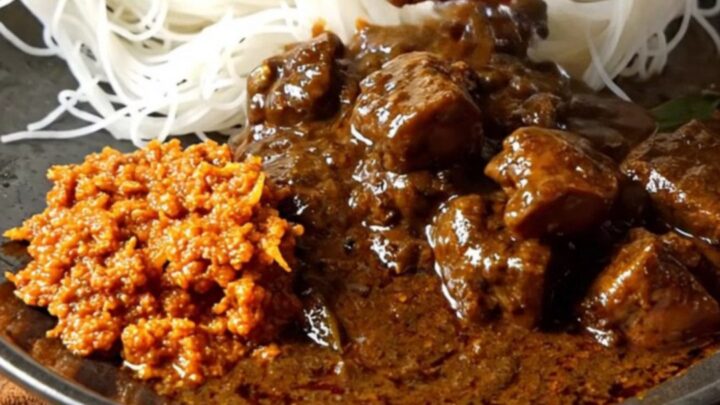
- Final finish and serviceOnce the five hours have elapsed, turn off the slow cooker. Serve the curry warm alongside traditional string hoppers and a side of fresh coconut pol sambol to balance the intense, smoky spice profile. The sauce should be dark, glossy, and clinging tightly to the tender pork cubes, indicating that the flavors have concentrated and reduced correctly.Look for The gravy should be dark, glossy, and clinging tightly to the tender pork cubes, indicating that the flavors have concentrated and reduced correctly.Tip If the gravy appears too thin after five hours, you can leave the slow cooker on high without the lid for an extra fifteen minutes to thicken it further.
Once the cooking time is complete, the pork should be dark and succulent. The gravy should have thickened significantly, transforming into a rich, clinging sauce. Inspect the texture of the pork by testing one piece with a fork; it should be tender and easily flaked. The final result should be a deeply flavorful, aromatic dish with a beautiful, dark, glossy finish ready for immediate serving.
Common mistakes
Avoid lifting the slow cooker lid frequently, as this releases heat and moisture, which can significantly increase the total cooking time and prevent the sauce from reaching the desired consistency.
Another common error is failing to properly brown or toast the curry powder if using a standard blend, which prevents the development of the signature deep, smoky color. Finally, ensure the pork is cut into uniform pieces to prevent some parts from being overcooked and dry while others remain undercooked.
How to tell it’s done
The pork is done when it is fork-tender and pulls apart with minimal pressure. Using a digital meat thermometer, ensure the thickest pieces have reached an internal temperature of 145°F (63°C).
The sauce should have reduced into a dark, thick, and aromatic glaze that coats the meat completely. If the meat offers resistance, continue cooking for an additional thirty minutes, as the time required can vary based on the specific cut of pork and the efficiency of your slow cooker.
- Steaks, chops and roasts: 145°F (63°C) in the thickest part, then a 3-minute rest
Up next · Part 3 of 3
2 variations · storage & make-ahead · 3 answers · printable card
Tips, FAQ & printable recipe (Part 3)← Back to the ingredients (Part 1)