Dinner · Part 1 of 3: Ingredients
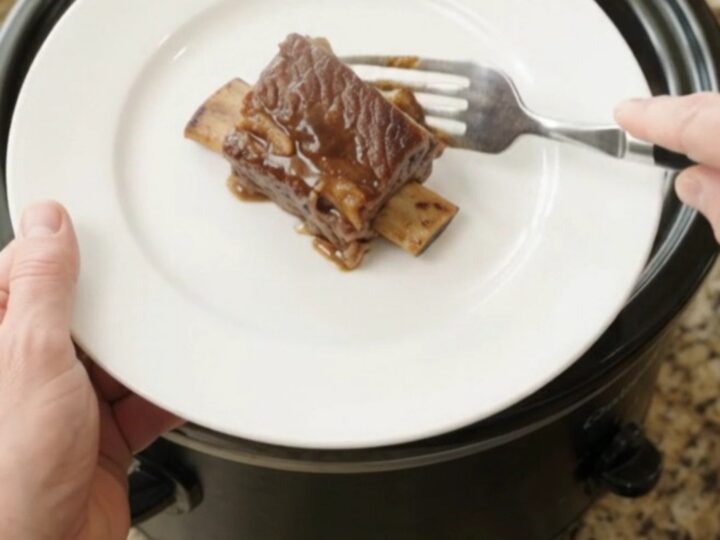
Apple Cider Molasses Beef Short Ribs: Dump-and-Forget Crockpot Dinner
- Prep
- Cook
- Total
- Serves
- 4
Five ingredients and one slow cooker are all it takes to turn beef short ribs into a fall-apart-tender dinner with a glossy, sweet-tangy molasses glaze. This dump-and-forget recipe layers thick-cut ribs with Honeycrisp apples and apple cider, then lets the Crockpot do the work for hours. The result is rich, deeply savory meat with a hint of fruit and a sauce that begs to be sopped up with bread. Perfect for busy weeknights or a low-effort weekend feast.
Short ribs are a cut that rewards patience, and the slow cooker is the ultimate tool for coaxing out their rich, beefy flavor. In this recipe, bone-in English-cut short ribs are layered with sliced Honeycrisp apples, unfiltered apple cider, and a generous pour of molasses garlic BBQ sauce.
The ingredients go into the pot raw and emerge hours later as a deeply caramelized, fork-tender dish. The apples melt into the sauce, adding a subtle sweetness that balances the dark molasses. This is the kind of meal that feels special but requires almost no hands-on time.
Ingredients
- 4 lb bone-in English-cut beef short ribs
- 3 Honeycrisp apples, sliced
- 1 cup unfiltered apple cider
- 1 1/2 cups molasses garlic BBQ sauce
Why this recipe works
Slow cooking breaks down the collagen in short ribs, turning tough connective tissue into gelatin that makes the meat succulent and tender. The low, moist heat of the Crockpot allows the ribs to cook gently for hours without drying out, so they end up so tender they nearly fall off the bone.
The apples and cider add natural sweetness and a touch of acidity that cuts through the richness of the beef, while the molasses garlic sauce forms a glossy, concentrated glaze as it reduces.
The dump-and-forget method is foolproof because it requires no searing, no deglazing, and no stirring. Layering the ingredients in the order specified ensures the apples stay intact and the sauce coats the meat evenly. The long, slow braise gives the flavors time to meld and deepen, creating a complex sauce that tastes like it simmered all day—because it did. This recipe is a set-it-and-forget-it dinner that delivers restaurant-quality results with minimal effort.
Notes and substitutions
English-cut short ribs are cut parallel to the bone, resulting in thick, meaty rectangles. They are ideal for slow cooking because they have plenty of marbling and connective tissue that breaks down over hours.
If you can only find flanken-style ribs (cut across the bone), they will work too, but they are thinner and may cook faster—check for tenderness at the 6-hour mark. Honeycrisp apples hold their shape well and offer a nice balance of sweet and tart; other firm apples like Fuji or Gala are good substitutes.
Unfiltered apple cider has a cloudy appearance and a more robust apple flavor than filtered juice. It adds a fruity note that brightens the dark molasses. Molasses garlic BBQ sauce is a store-bought convenience that brings sweetness, tang, and savory garlic in one bottle.
If you prefer a homemade version, you can combine ketchup, molasses, garlic, and vinegar. The slow cooker does all the work, so there is no need to brown the meat first—though searing before adding would add extra depth if you have the time.
- Honeycrisp apples: Any crisp, sweet-tart apple such as Fuji, Gala, or Braeburn works well.
- Unfiltered apple cider: Use filtered apple juice if cider is unavailable, but reduce the amount to 3/4 cup since juice is thinner.
- Molasses garlic BBQ sauce: Combine 1 cup ketchup, 1/4 cup molasses, 2 minced garlic cloves, 2 tablespoons apple cider vinegar, and 1 tablespoon Worcestershire sauce.
- Bone-in English-cut short ribs: Boneless chuck roast can be used; cut into large chunks and reduce cooking time to 6-7 hours.
Equipment
- 6-quart slow cooker
- Cutting board
- Chef's knife
- Measuring cups
- Large spoon
- Tongs or carving fork
- Serving plate
Up next · Part 2 of 3
8 steps · 8 h of cooking · what to look for at each stage
Step-by-step instructions (Part 2)