Desserts · Part 2 of 3: Instructions
Air-Fryer Blooming Apple Roses Step-by-step instructions
- Prep
- Cook
- Total
- Serves
- 6
Before you start
Before beginning, ensure your workspace is clean and you have a sharp paring knife ready for slicing the apples.
It is crucial to have the puff pastry thawed but still cold; if the pastry becomes too soft or warm, it will lose its ability to rise into flaky layers. Prepare your air fryer by ensuring the basket is clean and dry.
Have your apricot jam and cinnamon sugar measured and within reach to maintain a smooth assembly process. Organizing your ingredients beforehand will allow you to assemble the roses quickly, ensuring the pastry stays at the ideal temperature throughout the process.
Ingredients at a glance (5)
- 1 sheet puff pastry, thawed
- 20 g apricot jam
- 2 large Honeycrisp apples
- 2 tbsp cinnamon sugar
- powdered sugar, for serving
Instructions
Prep and Slicing
- Prepare the apple slicesSlice the apples into very thin half-moons. Ensure the slices are uniform to allow for consistent rolling and even cooking throughout the process.Look for Thin, pliable apple slicesTip Soaking the apple slices in water with a touch of lemon juice prevents browning while preparing the pastry.
The apples must be sliced into uniform, thin half-moons that are flexible. Check that your work surface is cool, and the puff pastry is pliable but not sticky or room temperature, as this is the most important factor for achieving a successful, professional-looking roll that holds its form during the baking phase.
Assembly and Rolling
- Assemble the rosesCut the puff pastry into long strips. Brush each strip with the apricot jam and sprinkle generously with the cinnamon sugar. Overlap the apple slices along the top edge of each strip, fold the bottom half of the pastry over the apples, and roll into a rosebud shape.Look for Tightly rolled pastry roseTip Keep the puff pastry chilled until the moment of use to ensure the layers remain flaky and distinct after baking.
As you assemble, ensure the apricot jam is spread in a very thin, even layer. If the jam is applied too thickly, it may leak during cooking and create a messy base. The roses should be rolled tightly enough to hold together, but not so compressed that the pastry cannot puff during the heating cycle.
Air Frying
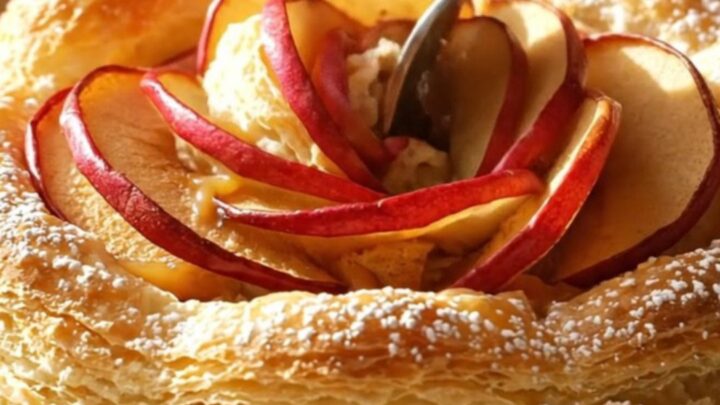
- Air fry to perfectionPlace the assembled roses into the air fryer basket. Cook at 360°F (182°C) for 12 minutes until the pastry is puffed and golden and the apple edges are caramelized. Remove carefully and dust with powdered sugar before serving.Look for Golden brown, crispy pastryTip Check the roses at the 10-minute mark to ensure the edges are not browning too quickly; cover with foil if necessary.
At the end of the air frying phase, the pastry must be visibly puffed and golden. If you notice any pale spots, you can rearrange the roses slightly for the final minute of cooking. The aroma should be of toasted pastry and caramelized sugar, indicating that the sugars have reached their peak flavor.
Common mistakes
A common mistake is using apple slices that are too thick, which prevents the roses from rolling easily and may result in undercooked fruit. Another frequent error is overcrowding the air fryer basket, which restricts the necessary airflow and leads to soggy, unevenly cooked pastry.
Additionally, failing to seal the pastry strips properly can cause the roses to unravel during cooking. Finally, using warm puff pastry is a recipe for disaster, as the butter will melt too quickly, resulting in a dense, greasy texture rather than the desired light, flaky layers that define a successful pastry.
How to tell it’s done
The apple roses are done when the puff pastry has achieved a deep, golden-brown color and feels firm to the touch. The layers of the pastry should be clearly defined and crisp. The apple edges should be tender and slightly caramelized, showing a light brown tint from the sugar.
When lifted, the rose should hold its shape firmly without collapsing. The internal temperature of the pastry is not a concern here, as there are no raw proteins involved, but visual cues of crispness and color are the primary indicators of a perfectly cooked pastry.
Up next · Part 3 of 3
2 variations · storage & make-ahead · 3 answers · printable card
Tips, FAQ & printable recipe (Part 3)← Back to the ingredients (Part 1)