Dinner · Part 2 of 3: Instructions
Accordion Tortilla Skillet Bake: Crispy Ridges, One Pan, 20 Minutes Step-by-step instructions
- Prep
- Cook
- Total
- Serves
- 4
Before you start
Set the oven rack to the center position and heat the oven to 400°F (200°C) before anything else, since cast iron and a fully hot oven are both non-negotiable for crisping. Grate the cheddar-jack if starting from a block, and drain the pico de gallo briefly if it is watery.
Crumble the cooked chorizo-beef so it can be spooned into narrow pleats without clumping. Warm the tortillas for ten seconds so the folds bend cleanly, then clear a workspace for the folding assembly line. Finally, set out tongs, an instant-read thermometer and a trivet for the hot skillet handle.
Ingredients at a glance (7)
- 8 flour tortillas (8-inch), folded accordion-style
- 1 lb cooked spicy chorizo-beef, crumbled
- 2 cups shredded cheddar-jack cheese
- 1 cup red enchilada sauce
- 1 cup pico de gallo, for serving
- 1/3 cup sliced black olives, for serving
- 1/2 cup sour cream, for swirling
Instructions
Phase 1: Heat, Fill, Fold
- Heat the oven and skilletPosition a rack in the center of the oven and heat it to 400°F (200°C). Set the 10-inch cast-iron skillet over medium-low heat so it warms gently while the filling comes together. A preheated pan starts crisping the tortilla pleats the moment they touch the surface, which is exactly the contrast this bake is after.Look for The oven reads 400°F on the dial and the skillet feels warm to a hovering palm.Tip No cast iron? Use a 10-inch oven-safe skillet; reduce nothing, just check crisping a minute early.
- Heat the chorizo-beef throughCrumble the chorizo-beef into a bowl or straight into the warm skillet and cook over medium heat, stirring, until it is heated through and sizzling at the edges. Check the temperature in the thickest crumbles: it should register at least 160°F (71°C) in the center. Drain excess fat if the meat looks greasy, leaving just enough to coat.Look for The crumbles glisten, edges crisp slightly, and steam rises off every spoonful.Safe temperature 160°F (71°C) internal temperature (ground meat)Tip Cooking raw chorizo and beef from scratch? Brown them together fully and drain before continuing.
- Fold the tortilla accordionsWorking one tortilla at a time, fold it in half, then fold it back on itself in loose pleats like a paper fan, creating an accordion shape about the width of the skillet. Aim for five to six deep pleats per tortilla; the deeper the folds, the more ridges for cheese and crisp edges later. Keep the folds loose so filling can nestle inside.Look for Each tortilla stands as a pleated fan that holds its shape when lifted.Tip Warm tortillas ten seconds in the microwave first; they fold without cracking at the creases.
By the end of the first phase the oven holds steady at 400°F (200°C), the chorizo-beef is hot and sizzling at the edges with an internal temperature of at least 160°F (71°C), and all eight tortillas stand as pleated fans on the cutting board. The fans should hold their shape when lifted, with five to six visible pleats each and no cracked creases. The skillet should be warm but not smoking. If any tortilla cracked while folding, warm it a few seconds longer and refold; a clean fan now means a packed, even bake later.
Phase 2: Pack, Sauce, Bake
- Arrange and stuff the pleatsStand the folded tortillas upright in the warm skillet, fanning them slightly so they lean against each other in a ring. Spoon the hot chorizo-beef into every pleat, pushing it down between the folds with a spoon or tongs so each crevice carries meat. Distribute evenly so every pull-apart pleat delivers filling.Look for No empty pleats remain and the tortillas stand packed shoulder to shoulder.Tip Fill the center last and press gently; a packed center keeps the fan from flopping open.
- Blanket with cheeseScatter the shredded cheddar-jack over the top of the folded tortillas, letting it fall into the pleats and pile on the ridges. Reserve a small handful for the very top so some cheese melts last and stays glossy. Cheese inside the folds binds the pleats together; cheese on the ridges crisps into lacy edges.Look for Tortilla ridges peek through an even layer of shredded cheese.Tip Shred cheese from a block when possible; it melts smoother than starch-coated pre-shredded bags.
- Pour the sauce around the basePour the red enchilada sauce carefully around the base of the skillet, between the tortillas rather than over the top. The bottoms drink up the sauce and turn tender and tangy while the exposed ridges above stay dry enough to bake shatteringly crisp. Aim for a shallow, even ring of sauce.Look for The sauce pools about a quarter inch deep around every tortilla base.Tip Pour slowly along the skillet wall so the stream does not wash filling out of the pleats.
- Bake until the ridges crispTransfer the skillet to the center of the hot oven and bake for 16 minutes at 400°F (200°C). Halfway through, rotate the pan for even browning. The ridges should turn deep golden and shatteringly crisp while the sauce bubbles thickly at the base and the cheese on top melts into molten ribbons.Look for Ridges are deep golden, sauce bubbles at the edges, cheese is fully melted and glossy.Tip If the ridges pale but the sauce is bubbling, broil for one watchful minute at the end.
The second phase ends when the skillet leaves the oven after sixteen minutes. Look for deep golden, visibly crisped ridges on every tortilla fan, cheese fully melted and glossing the creases, and red sauce bubbling thickly around the base with no thin, watery patches. The kitchen should smell of toasted tortilla, browned cheese and warm chili. Tap a ridge with tongs: it should crackle and hold, not bend. If the ridges still pale or the sauce looks thin, return the pan for two to three more minutes before moving on.
Phase 3: Top and Pull
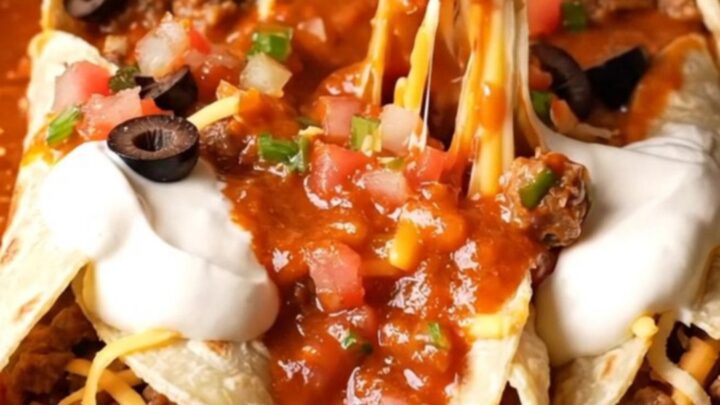
- Top and pull the pleatsLet the skillet rest five minutes so the molten cheese sets enough to hold together. Spoon pico de gallo over the top, scatter sliced black olives, and drizzle sour cream in wide swirls. Grip one loaded pleat with tongs or a fork, lift, and let the cheese stretch; serve straight from the skillet while the ridges still crackle.Look for A lifted pleat stretches cheese in long ribbons and the ridge snaps audibly.Tip Rest the full five minutes; cutting into molten cheese too early collapses the pleats.
The final phase closes with a skillet that looks and sounds like a restaurant platter. After the five-minute rest, the cheese has set just enough to stretch in long ribbons instead of sliding off, the pico de gallo sits bright and juicy on top, olive slices dot the ridges, and the sour cream swirls soften as they hit the heat.
A lifted pleat should come out loaded, stretching cheese and cracking at the ridge in the same bite. The sauce at the base should still be gently bubbling, keeping every serving hot to the last pull.
Common mistakes
The most common failure is folding too tight: pleats pressed together leave no room for filling, and the bake turns dense instead of layered. The opposite error, folding too loose, lets the fans flop open and spill their meat.
Overfilling the top with sauce is the third trap; sauce poured over the ridges steams them soft and ruins the crisp-tender contrast that defines this dish. Underbaking shows up as bendy ridges, so trust color and sound over the clock. Finally, skipping the five-minute rest makes the molten cheese slide off the pleats the moment they are lifted.
How to tell it’s done
The bake is done when three things are true at once. First, the exposed tortilla ridges are deep golden brown and sound crisp when tapped with tongs; pale, bendable ridges need a few more minutes. Second, the enchilada sauce bubbles thickly around the base with no watery pools left.
Third, the cheese on top is completely melted, glossy and spotted with browned edges. Because the chorizo-beef filling must be fully heated through, verify it registers at least 160°F (71°C) at the center of the thickest crumbles before anything leaves the pan. A five-minute rest after baking lets the cheese set so the pleats pull cleanly.
- Ground meat: 160°F (71°C) in the thickest part
Up next · Part 3 of 3
4 variations · storage & make-ahead · 5 answers · printable card
Tips, FAQ & printable recipe (Part 3)← Back to the ingredients (Part 1)