Dinner · Part 2 of 3: Instructions
20-Minute Skillet Lasagna Roll-Ups Step-by-step instructions
- Prep
- Cook
- Total
- Serves
- 4
Before you start
Before starting, gather all the ingredients and equipment. Fill a large pot with water and bring it to a boil—this can happen while you mix the ricotta filling.
Have a colander ready for draining the noodles, and lay out a sheet of parchment paper on a clean work surface.
Measure the ricotta, parmesan, egg, garlic, parsley, and pepper into a bowl, and have the beef marinara and crushed tomato sauce open and within reach. Shred the mozzarella if not already shredded, and pick the basil leaves so they are ready to tear at the end.
Ingredients at a glance (12)
- 8 wavy lasagna noodles
- Salt, for the pasta water, to taste
- 2 cups whole milk ricotta cheese
- 1 cup grated parmesan cheese
- 1 large egg
- 2 cloves garlic, minced
- 2 tbsp fresh parsley, chopped
- 1/2 tsp black pepper
- 2 cups beef marinara sauce
- 1 cup crushed tomato sauce
- 2 cups shredded mozzarella cheese
- 1/4 cup fresh basil leaves, torn
Instructions
Boil and Mix
- Boil the noodlesBring a large pot of salted water to a rolling boil. Add the lasagna noodles and cook until al dente, about 8 minutes, stirring occasionally to prevent sticking. Drain in a colander and rinse briefly with cool water. Lay the noodles flat in a single layer on parchment paper, making sure they don't overlap.Look for Noodles are flexible, pliable, and not cracking when bent.Tip Keep a little pasta water to loosen the sauce if needed.
- Mix the ricotta fillingIn a mixing bowl, whisk together the ricotta, parmesan, egg, garlic, parsley, and black pepper until well combined and smooth. The mixture should be thick but spreadable.Look for Filling is creamy, uniform, and holds its shape when stirred.Tip Let the egg come to room temperature for easier mixing.
The noodles are al dente, flexible, and lying flat on parchment paper. The ricotta filling is smooth, creamy, and well combined with no streaks of egg. The kitchen smells of garlic and parsley, and the pasta water is still hot.
Roll and Simmer
- Spread and rollSpread a generous layer of the ricotta mixture evenly over each boiled noodle. Spoon a thin layer of beef marinara over the ricotta, covering it completely. Starting at one short end, roll each noodle into a snug pinwheel cylinder, keeping the filling inside.Look for Rolls are tight, with filling visible at the ends.Tip Use a spatula to spread the filling gently to avoid tearing the noodles.
- Arrange in skilletPour the crushed tomato sauce into a 10-inch cast iron skillet, spreading it evenly. Stand the roll-ups upright in the skillet, nestled together, with the seam sides against each other so they hold their shape.Look for Roll-ups are standing upright, snugly packed.Tip If the rolls tip over, spoon a little sauce around them to help them stay.
- Top with mozzarella and cookSprinkle the shredded mozzarella evenly over the tops of the roll-ups. Cover the skillet with a glass lid and place over medium heat. Cook until the cheese is completely melted and bubbling, about 5 minutes. The sauce should be simmering around the rolls.Look for Cheese is liquefied and bubbling at the edges.Safe temperature 160°F (71°C) internal temperature (ground meat)Tip Peek occasionally—if the sauce reduces too much, add a splash of water.
The roll-ups are standing upright in the skillet, nestled in the tomato sauce. The mozzarella is melting and starting to bubble, and the sauce is simmering around the edges. The aroma of marinara and cheese fills the air.
Finish and Serve
- Garnish and serveRemove the lid and scatter the torn basil leaves over the top. Finish with a few cracks of black pepper if desired. Use a spatula to lift the roll-ups onto plates, spooning extra sauce and melted cheese from the skillet over each serving.Look for Basil is bright green, cheese is glossy and stretchy.Safe temperature 160°F (71°C) internal temperature (egg dishes)Tip Serve immediately while the cheese is molten.
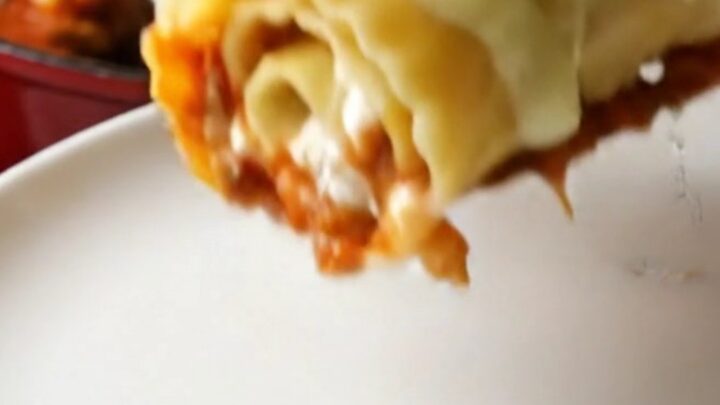
The cheese is fully melted and bubbling, the basil is bright green on top, and the roll-ups are glossy with sauce. The skillet is sizzling, and each roll-up holds its shape when lifted.
Common mistakes
One common mistake is overcooking the noodles until they are too soft, making them difficult to roll without tearing. Aim for al dente, as they will continue to cook in the skillet. Another issue is overfilling the rolls, which can cause them to burst open during cooking.
Keep the filling layer even and not too thick, and roll snugly but not tightly. Also, avoid lifting the lid too often during cooking, as this releases steam and slows the melting process.
How to tell it’s done
The roll-ups are done when the cheese on top is completely melted and bubbling, and the sauce around the edges is simmering. The internal temperature of the filling should reach 160°F (71°C) to ensure the egg and ground beef are fully cooked.
To check, insert an instant-read thermometer into the center of a roll-up; it should read at least 160°F (71°C). The noodles should be tender but still hold their shape when lifted with a spatula.
- Ground meat: 160°F (71°C) in the thickest part
- Egg dishes: 160°F (71°C) in the thickest part
Up next · Part 3 of 3
4 variations · storage & make-ahead · 5 answers · printable card
Tips, FAQ & printable recipe (Part 3)← Back to the ingredients (Part 1)