Dinner · Part 2 of 3: Instructions
10-Minute Restaurant-Style Fettuccine Alfredo Step-by-step instructions
- Prep
- Cook
- Total
- Serves
- 4
Before you start
Before you start, set out all your ingredients and equipment. Bring a large pot of water to a boil, and have a colander and a glass measuring cup ready. Grate the Parmigiano Reggiano if you haven't already—you'll need one full cup.
Mince the parsley and crack the black pepper for garnish. Make sure your skillet is large enough to hold the pasta and sauce, ideally 12 inches. Once everything is prepped, the cooking goes quickly, so stay close to the stove.
Ingredients at a glance (10)
- 8 oz dry fettuccine
- 1 tbsp kosher salt, for the pasta water
- 1/2 cup unsalted butter (1 stick)
- 1 1/2 tbsp all-purpose flour
- 1 1/2 cups heavy whipping cream
- 1 tsp garlic powder
- 1 tsp Italian seasoning
- 1 cup freshly grated Parmigiano Reggiano (about 3 oz)
- Freshly cracked black pepper, for garnish, to taste
- Minced flat-leaf parsley, for garnish, to taste
Instructions
Boil the Pasta
- Boil the PastaBring a large pot of water to a rolling boil. Add the kosher salt and stir to dissolve. Drop in the dry fettuccine and cook according to the package directions until al dente, about 8 minutes. Before draining, dip a glass measuring cup into the pot and reserve 1 cup of the cloudy starchy pasta water. Drain the pasta in a colander, but do not rinse.Look for The pasta should be tender but still firm to the bite, and the reserved water should look milky and starchy.Tip Reserve the pasta water before draining—it's the secret to a silky sauce that clings to the noodles.
The pasta should be al dente, tender but still firm to the bite. The reserved pasta water should look cloudy and starchy, a sign it's rich in starch that will help thicken the sauce.
The aroma of salted boiling water and fresh pasta fills the kitchen, and the fettuccine should be separate and not sticking together.
Make the Alfredo Sauce
- Make the Alfredo SauceIn a large skillet over medium heat, melt the butter. Whisk in the flour and cook for 1 minute, stirring constantly, until the mixture is bubbly and golden. Slowly pour in the heavy cream while whisking, and continue to cook until the sauce thickens and bubbles, about 2-3 minutes. Stir in the garlic powder, Italian seasoning, and a pinch of salt.Look for The sauce should coat the back of a spoon and have a smooth, velvety texture.Tip Whisk constantly to prevent lumps from forming when adding the cream.
The sauce should be bubbling gently and thickened enough to coat the back of a spoon. It should smell buttery and creamy, with a hint of garlic and herbs. The color should be a pale ivory, smooth and glossy, with no lumps. Whisk constantly to keep it silky.
Combine and Finish
- Combine and FinishAdd the drained fettuccine directly to the skillet with the sauce. Sprinkle the freshly grated Parmigiano Reggiano over the pasta, and toss vigorously with tongs or a wooden spoon until every noodle is coated and the sauce is glossy. If the sauce seems too thick, add a splash of the reserved pasta water and toss again. Season with additional salt if needed.Look for The sauce should cling to the pasta and look creamy, not runny or greasy.Tip Toss off the heat to prevent the cheese from clumping—the residual heat melts it gently.
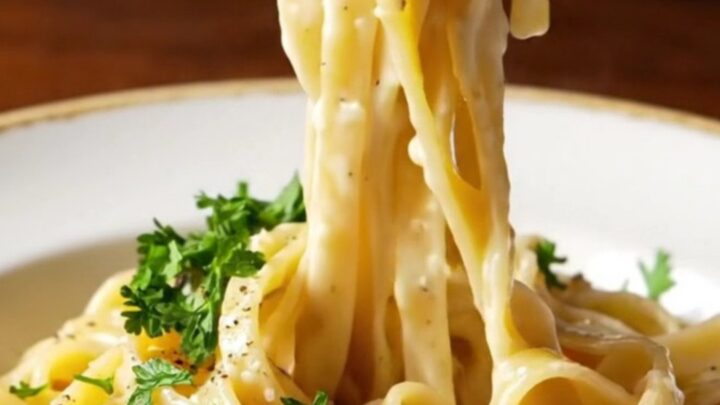
- Garnish and ServeTransfer the fettuccine Alfredo to a warm shallow bowl. Garnish with freshly cracked black pepper and a generous sprinkle of minced flat-leaf parsley. Twirl a portion onto a fork and serve immediately while hot and creamy.Look for The dish should look glossy, with visible specks of pepper and parsley for color.Tip Warm the serving bowl by rinsing it with hot water—this keeps the pasta hot longer.
The pasta should be evenly coated with the creamy sauce, which clings to every strand. The cheese should be fully melted, and the sauce should look glossy and luxurious. The dish should smell rich, nutty, and savory, with the fresh parsley adding a bright, herbal note. Serve immediately to enjoy the perfect texture.
Common mistakes
A common mistake is over-cooking the sauce, which can cause the cream to break and become greasy. Keep the heat at medium and whisk constantly until the sauce just thickens.
Another pitfall is adding the cheese all at once over high heat, which can cause it to clump. Remove the skillet from the heat before adding the cheese and toss gently. Finally, don't skip the pasta water—it's the key to a silky, emulsified sauce.
How to tell it’s done
The fettuccine Alfredo is done when the sauce is thick enough to coat the back of a spoon and clings to the pasta without being runny. The noodles should be al dente—tender but with a slight bite.
The sauce should look glossy and smooth, with no visible separation of butter or cream. When you twirl a forkful, the sauce should cling to the pasta and not slide off. Taste a noodle to ensure it's seasoned well, adding a pinch of salt if needed.
Up next · Part 3 of 3
4 variations · storage & make-ahead · 5 answers · printable card
Tips, FAQ & printable recipe (Part 3)← Back to the ingredients (Part 1)